
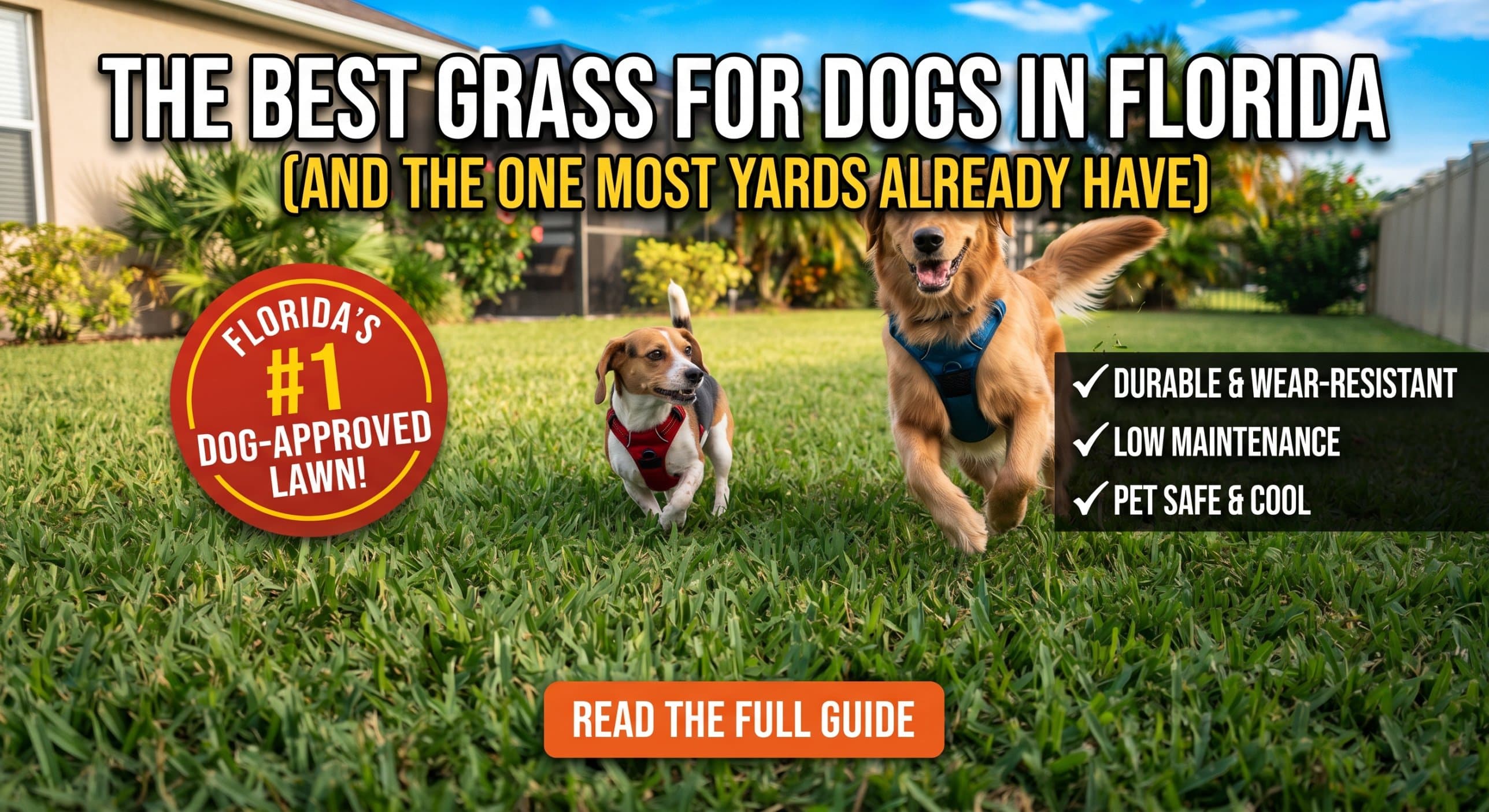
You've patched the same bare strip along the fence three times. You've reseeded the path your dog wears between the back door and his favorite corner. And every summer it looks worse.
At some point every Florida dog owner has the same thought: maybe it's the grass.
Often it is. Here's the uncomfortable part: the grass in most Pasco County yards is the one that handles dogs the worst.
How Florida's Main Grasses Compare for Dogs
The trait that matters most for a dog yard is wear tolerance, meaning how well the grass handles being run on, skidded on and dug at, and how fast it recovers. University of Florida's turfgrass selection guidance rates them like this:
- Zoysiagrass — wear tolerance good to excellent, shade tolerance good depending on cultivar, drought tolerance medium
- Bermudagrass — wear tolerance good to excellent, shade tolerance poor, drought tolerance good
- St. Augustinegrass — wear tolerance poor, shade tolerance good depending on cultivar, drought tolerance fair
- Bahiagrass — wear tolerance poor, shade tolerance poor, drought tolerance excellent
- Centipedegrass — wear tolerance poor, shade tolerance fair, drought tolerance medium
Read that list again and you'll spot the problem. St. Augustine is the default lawn across most of Wesley Chapel, Lutz and New Tampa, and its wear tolerance is rated poor.
The Two Best Choices for a Dog Yard
If you're genuinely replacing a lawn, the shortlist is short.
Zoysiagrass is the best all-around pick for most Florida dog owners. It takes traffic well, it holds up in part shade depending on the cultivar, and it forms a dense mat that resists the worn paths dogs create. The trade-offs are cost, slower recovery when it is damaged, and the fact that it needs more water than Bahia.
Bermudagrass is the other strong option, especially for a big, sunny, high-traffic yard. It recovers from damage faster than anything else on the list. But it has poor shade tolerance, so if your yard is ringed with oaks, it will thin out under them.
What About the Grass You Already Have?
Before you spend thousands on resodding, be honest about the cause. In most yards we see, the grass isn't failing because of the species. It's failing because of three fixable things.
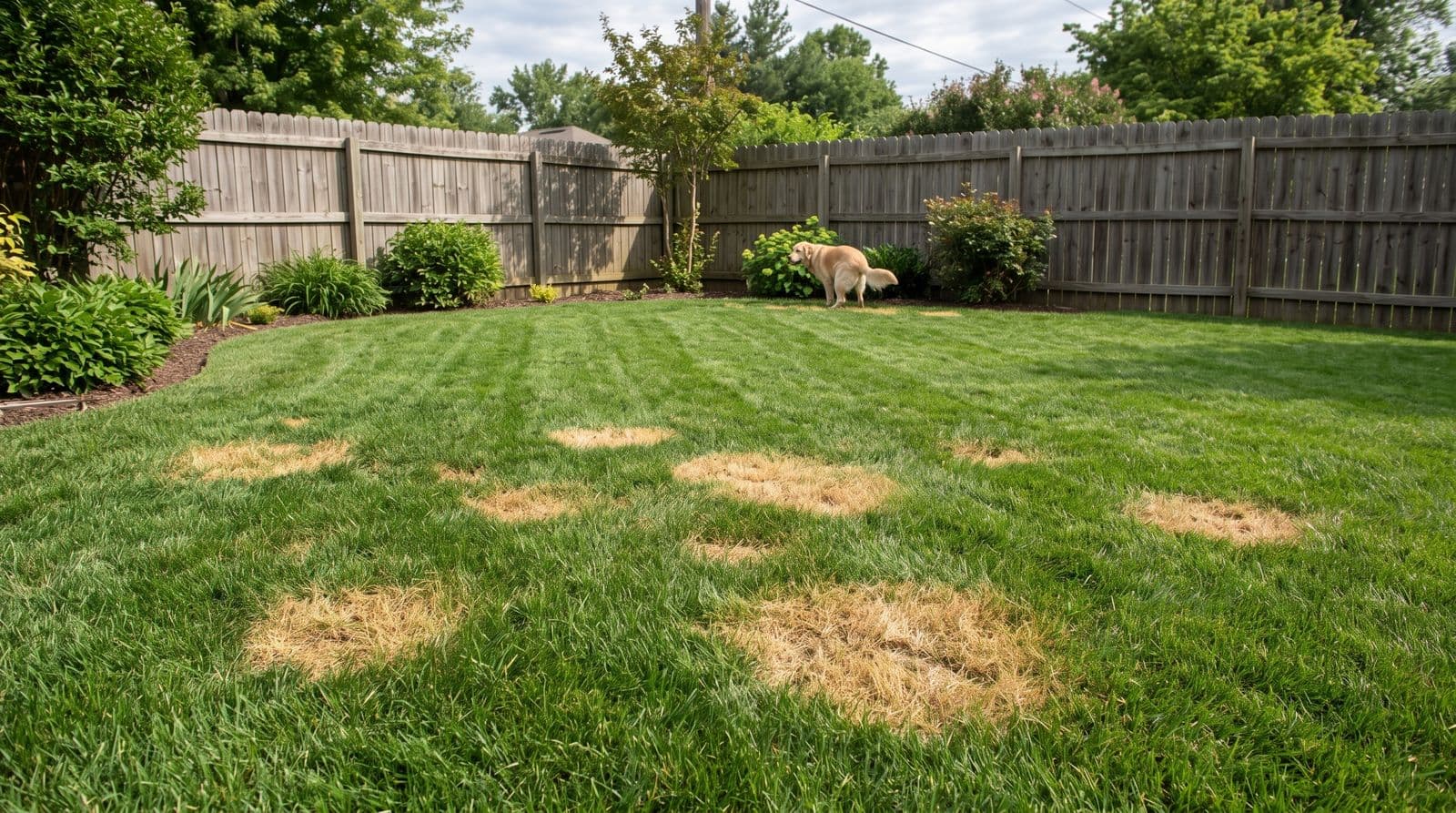
- Urine. Concentrated nitrogen and salts burn grass regardless of species, leaving yellow rings with green edges.
- Waste left sitting. As UF/IFAS Extension notes, acidic, high-nitrogen piles kill the grass underneath within days — and tall St. Augustine hides them until you mow over dog poop.
- Traffic in one path. Every dog has a route, and no grass survives a route it runs ten times a day.
Replacing St. Augustine with Zoysia while leaving all three of those in place just gives you more expensive dead spots. Start with dog pee killing grass and yellow spots and dog poop killing grass and how to fix it.
Florida-Specific Things That Trip People Up
- Sandy soil. Much of Pasco County drains fast, which means urine salts move down but nutrients wash out too, so thin grass stays thin.
- Chinch bugs. They devastate St. Augustine specifically, and the damage looks exactly like dog urine burn. If your spots keep spreading outward, suspect chinch bugs and call a lawn professional.
- Rainy season. Summer downpours spread waste bacteria and compact wet soil under paws, which we cover in Florida's rainy season and dog waste runoff.
- Shade from oaks. Bermuda will not work under them. Zoysia or a shade-tolerant St. Augustine cultivar is the realistic choice.
- Watering restrictions. Check your local water management district schedule before choosing a thirstier grass.
Should You Just Use Artificial Turf?
It's a legitimate option for small yards or a dedicated potty area, and it eliminates the dead-spot problem entirely. Two honest warnings for Florida: it gets significantly hotter than grass in summer sun, which matters for paws, and it needs rinsing because urine does not drain away and break down the way it does in soil.
If you go this route, pick a product with real drainage and plan on hosing it down regularly. Waste still has to be picked up just as often, because it sits on the surface rather than breaking down.
The Cheapest Lawn Upgrade Nobody Sells You
Before you price out sod, try this for one month: pick up waste twice a week instead of whenever you notice it, water deeply after your dog's usual pee spots, and put a stepping-stone or mulch path along the route he already runs.
A surprising number of yards we service recover on their own once waste stops sitting. The grass was never the problem.
We'll Handle the Part That's Killing It
We're a veteran-owned local company, and we scoop yards every week in Wesley Chapel, Zephyrhills, Land O' Lakes, San Antonio, Dade City, Lutz, New Tampa and Plant City. Everything gets hauled away, so nothing is left sitting on your grass or in your bin.
Flat weekly pricing, no contracts, and a photo of your latched gate after every visit. Get your free instant quote in about 60 seconds, with no phone call needed.
Keep reading: Why Dog Poop Is Killing Your Grass (And How To Fix It).
Frequently Asked Questions
What is the best grass for dogs in Florida?
Zoysiagrass is the best all-around choice for most Florida dog owners because it has good to excellent wear tolerance and handles part shade. Bermudagrass is the better pick for large, sunny, high-traffic yards.
Is St. Augustine grass good for dogs?
Not especially. University of Florida rates its wear tolerance as poor, so it struggles with the worn paths and skid marks dogs create, even though it is the most common lawn grass in the area.
Will changing my grass stop the yellow spots?
No. Yellow spots come from concentrated nitrogen and salts in dog urine, which burn any grass species. Watering the spot deeply right after your dog goes does more than changing grass.
Is artificial turf better for dogs in Florida?
It solves dead spots but gets much hotter than grass in summer sun and needs regular rinsing, because urine sits on the surface instead of draining away and breaking down.
Why does my grass keep dying even though I pick up after my dog?
Common culprits are urine burn, worn traffic paths, sandy soil that drains nutrients away, and chinch bugs, which damage St. Augustine in a pattern that looks a lot like urine burn.
About the Author
Tiffani, Owner of Scoop Dog
U.S. Army veteran and Zephyrhills dog mom to Luna and Snickers. Tiffani personally scoops yards and walks dogs across Wesley Chapel, Zephyrhills, Land O' Lakes, San Antonio, Dade City, Lutz, New Tampa and Plant City, and writes every guide from what she sees in local backyards each week. Read her story.
Ready To Hand This Off?
Serving Wesley Chapel, Zephyrhills, Land O' Lakes, San Antonio, Dade City, Lutz, New Tampa & Plant City. Get your instant price in 30 seconds or call (813) 563-2310.
Local service areas
- Pooper scooper in Wesley Chapel
- Pooper scooper in Zephyrhills
- Pooper scooper in Dade City
- Pooper scooper in Lutz
- Pooper scooper in New Tampa
- Pooper scooper in Plant City
- Pooper scooper in Land O' Lakes
- Pooper scooper in San Antonio
- Dog walker in Wesley Chapel
- Dog walker in Zephyrhills
- Dog walker in Dade City
- Dog walker in Lutz
- Dog walker in New Tampa
- Dog walker in Plant City
- Dog walker in Land O' Lakes
- Dog walker in San Antonio