
Let's answer it straight, because that's what you came for.
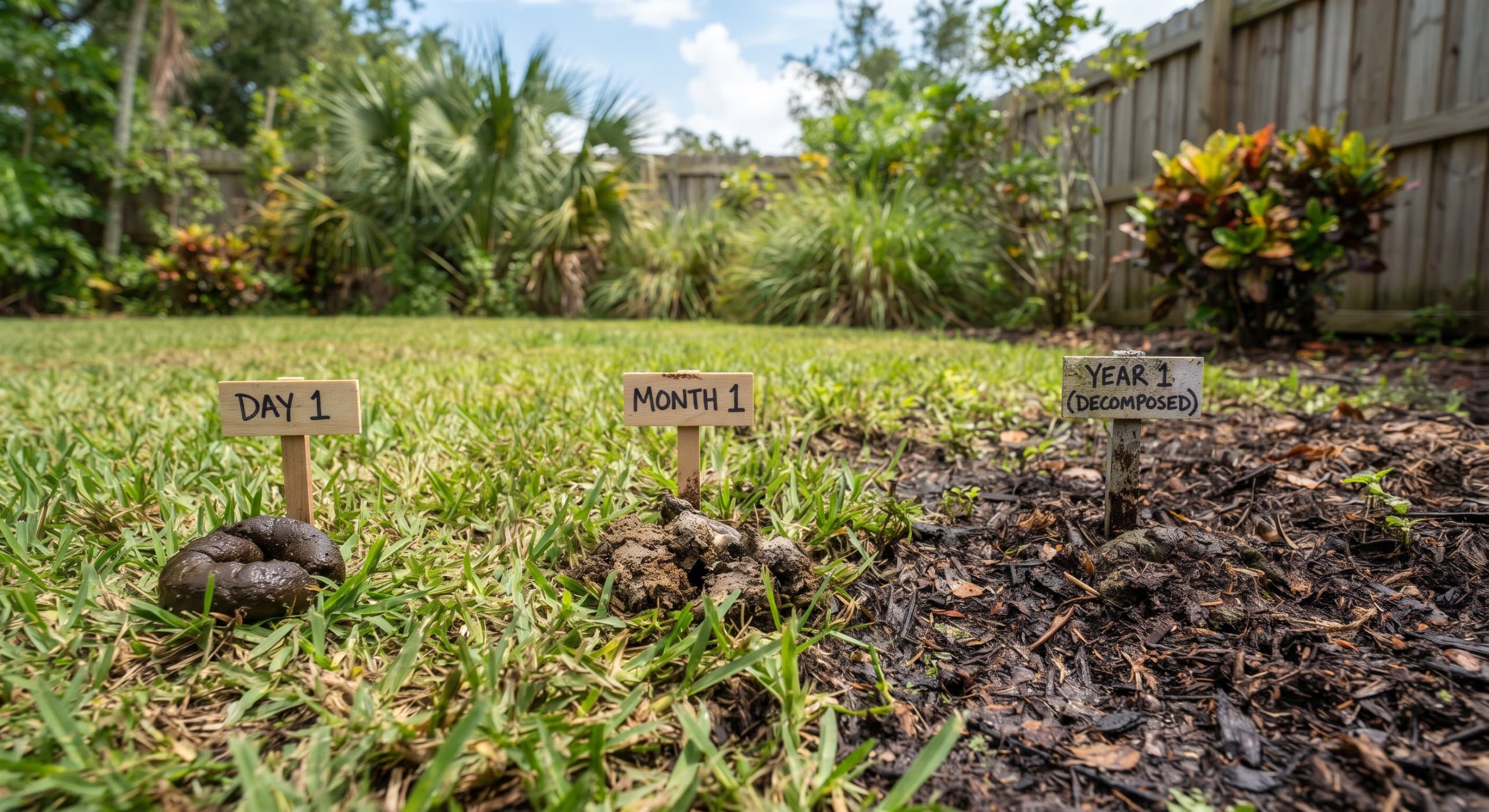
Dog poop can take a year or more to fully break down. Not a few weeks. Not "until the next good rain." A year or more, depending on climate, the dog's diet and the size of the pile.
That figure comes from municipal stormwater guidance like this pet waste FAQ sheet, and it's the number most people are shocked by. Because here's the thing: while it sits there slowly breaking down, it isn't harmlessly fading away. It's actively doing damage.
Why It Takes So Long
Dog waste is high in protein and nitrogen, which makes it dense, acidic and slow to break down. It isn't like cow or horse manure, which comes from plant-eaters and composts relatively quickly in a field.
- Diet matters. High-protein kibble produces denser waste that lingers longer.
- Size matters. A Great Dane's pile takes far longer than a Chihuahua's.
- Weather matters, but not the way people hope. Sun bakes the outside into a crust that protects the inside.
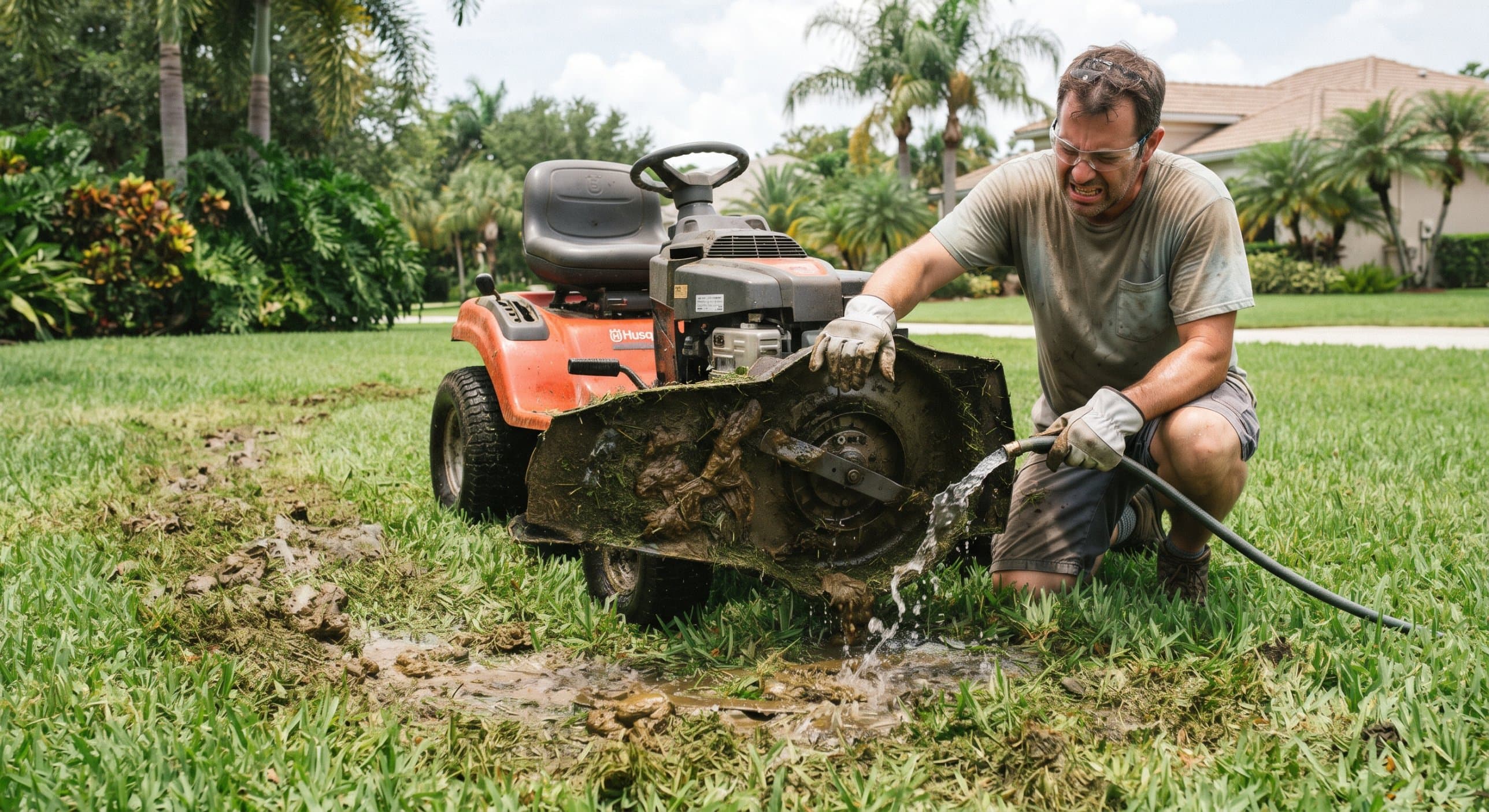
- Grass height matters. Waste hidden in tall St. Augustine grass stays damp, breaks down even slower, and turns into a hazard when you accidentally mow over dog poop.
What Florida Weather Actually Does to It
Here in Pasco County we get the worst of both worlds. Our summer heat dries the outside of a pile into a shell within hours, and then our afternoon downpours soak it, soften it and spread it.
So no, rain does not make the problem disappear. It moves it. It washes the bacteria into your grass, your soil, your shoes and eventually your storm drains. We go deeper into that in what Florida's rainy season does to dog waste runoff.
And when it's hot, breakdown doesn't speed up as much as the smell does. That's covered in why Florida heat makes dog poop smell worse and draw flies.
"But Isn't It Just Fertilizer?"
No. This is the most common myth we hear, and it costs people their lawns.
Pet waste is not recommended as fertilizer. It's too acidic and too high in nitrogen, so instead of feeding your grass it burns it, turning it yellow and then killing it in patches. If you've got mystery brown spots, start with why dog poop is killing your grass and how to fix it.
What's Living in It While It Sits There
This is the part that changes how people think about the timeline. According to the U.S. Environmental Protection Agency (EPA) and the CDC, a single gram of dog waste carries roughly 23 million fecal coliform bacteria, which is close to twice what human waste carries.
The average dog produces about 0.75 pounds of waste a day. Do that math across a year of "it'll break down eventually" and you're looking at roughly 274 pounds sitting in your yard annually, per dog.
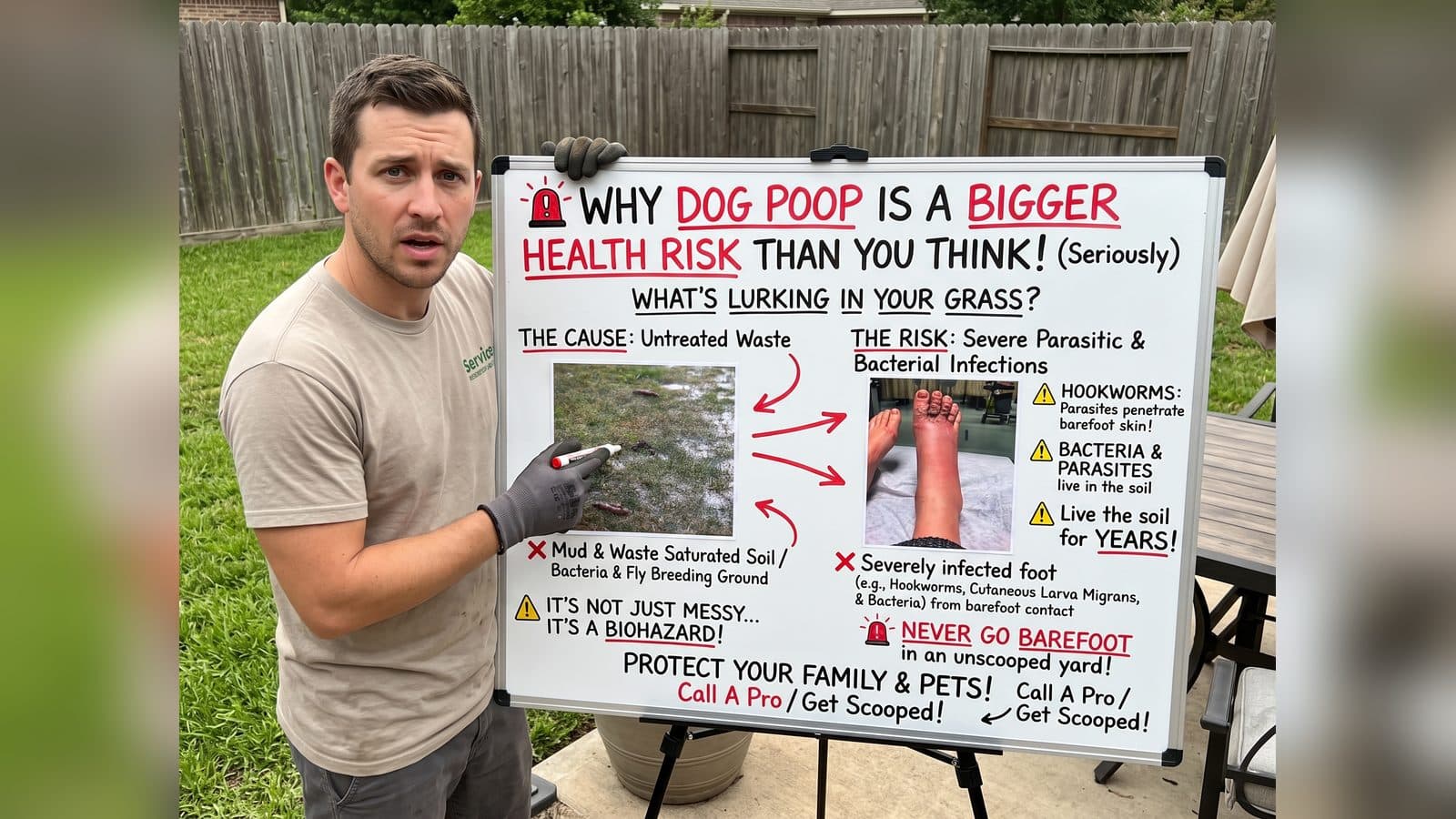
Roundworm and hookworm eggs are the bigger concern for families. Roundworm eggs in particular can survive in soil for years, long after the pile itself is gone. That's why "it decomposed" does not mean "it's safe." More on that in why dog poop is a bigger health risk than you think.
How Long Before It Starts Causing Problems?
Much faster than it takes to decompose. Here's the realistic Florida timeline:
- Within hours: flies find it and lay eggs
- Within 1 to 2 days: the smell is noticeable in summer heat
- Within 3 to 7 days: the grass underneath starts to yellow
- Within 1 to 2 weeks: bacteria have spread into surrounding soil
- Within a month: visible dead patches in the lawn
- A year or more: the pile itself finally breaks down, with parasite eggs potentially still in the soil
That gap, between when it starts causing harm and when it finally disappears, is the whole argument for picking it up.
Does Burying It Help?
Not really, and it can make things worse. Burying slows decomposition further by cutting off oxygen, and it puts bacteria closer to groundwater and to plant roots. Don't bury it near vegetable gardens, fruit trees or anywhere water collects.
The right methods are covered in how to dispose of dog poop properly.
The Only Timeline That Actually Works
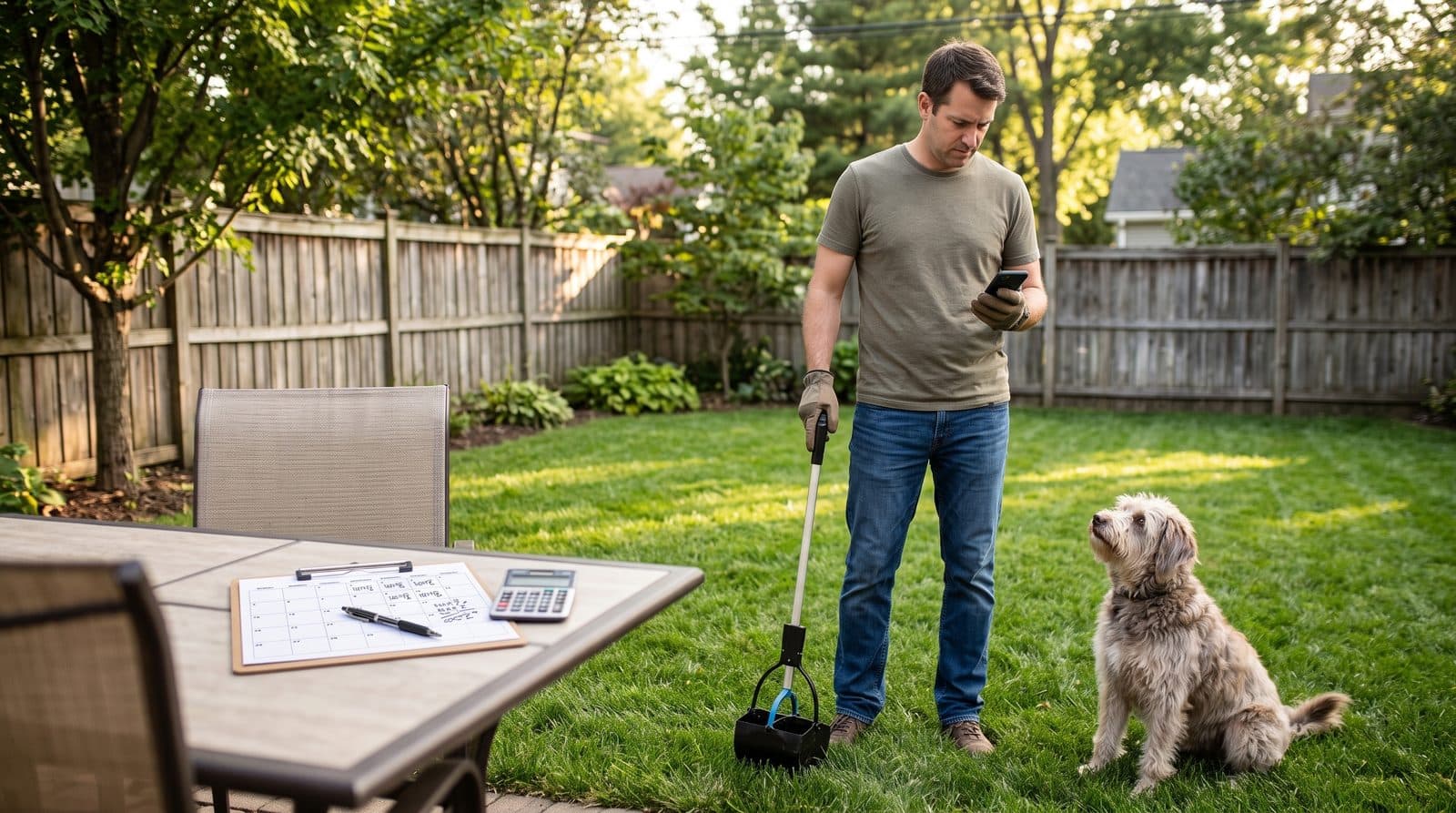
One to two times a week. That's it. At that interval nothing has time to break down into your soil, kill your grass, build a fly population or get tracked inside.
If you want the reasoning behind that schedule, read how often you should scoop dog poop.
Let Someone Else Keep the Clock Running
You don't have to think about decomposition timelines at all if the waste never gets the chance to sit. We're a veteran-owned local company scooping yards every week in Wesley Chapel, Zephyrhills, Land O' Lakes, San Antonio, Dade City, Lutz, New Tampa and Plant City, and we haul everything away so nothing is left to break down in your bin either.
Flat weekly pricing, no contracts, and a photo of your latched gate after every visit. Get your free instant quote in about 60 seconds, with no phone call needed.
Keep reading: How Often Should You Scoop Dog Poop?.
Frequently Asked Questions
How long does it take dog poop to decompose?
It can take a year or more to fully break down, depending on climate, the dog's diet and the size of the pile. Hot, dry weather forms a crust that slows the process even further.
Does rain make dog poop go away?
No. Rain breaks the pile apart and spreads the bacteria into your grass, soil and storm drains. The waste doesn't disappear, it just stops being visible.
Is dog poop good fertilizer for grass?
No. It is too acidic and too high in nitrogen, so it burns grass and leaves yellow or dead patches instead of feeding the lawn.
How long do parasite eggs survive after the poop is gone?
Roundworm eggs can survive in soil for years, well after the waste itself has broken down. Picking up promptly is what prevents them from building up in the first place.
Is it okay to just bury dog poop in the yard?
It is not recommended. Burying slows decomposition by limiting oxygen and moves bacteria closer to groundwater, plant roots and vegetable gardens.
About the Author
Tiffani, Owner of Scoop Dog
U.S. Army veteran and Zephyrhills dog mom to Luna and Snickers. Tiffani personally scoops yards and walks dogs across Wesley Chapel, Zephyrhills, Land O' Lakes, San Antonio, Dade City, Lutz, New Tampa and Plant City, and writes every guide from what she sees in local backyards each week. Read her story.
Ready To Hand This Off?
Serving Wesley Chapel, Zephyrhills, Land O' Lakes, San Antonio, Dade City, Lutz, New Tampa & Plant City. Get your instant price in 30 seconds or call (813) 563-2310.
Local service areas
- Pooper scooper in Wesley Chapel
- Pooper scooper in Zephyrhills
- Pooper scooper in Dade City
- Pooper scooper in Lutz
- Pooper scooper in New Tampa
- Pooper scooper in Plant City
- Pooper scooper in Land O' Lakes
- Pooper scooper in San Antonio
- Dog walker in Wesley Chapel
- Dog walker in Zephyrhills
- Dog walker in Dade City
- Dog walker in Lutz
- Dog walker in New Tampa
- Dog walker in Plant City
- Dog walker in Land O' Lakes
- Dog walker in San Antonio