
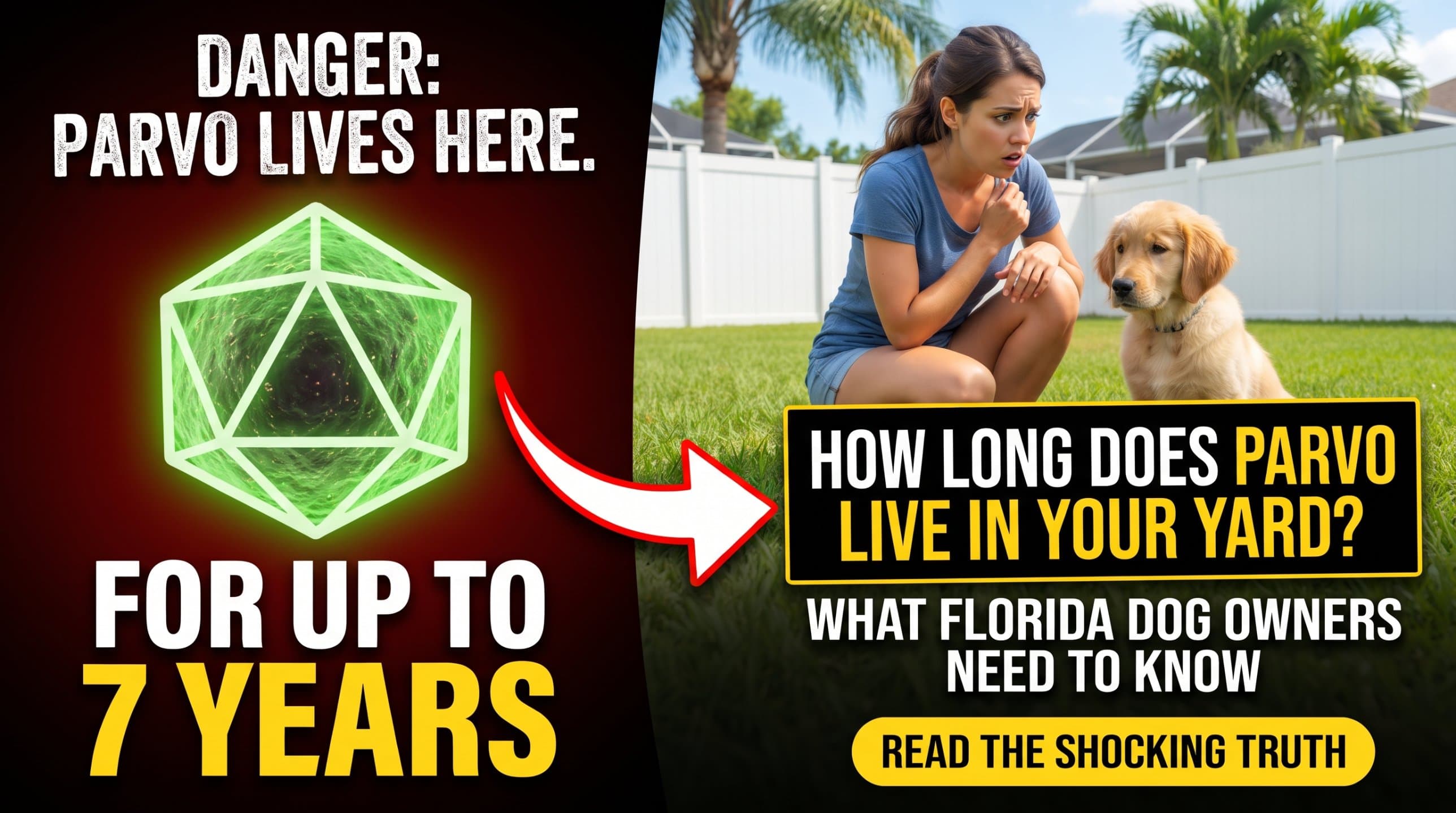
If you're reading this, you're probably in one of two situations. Either a dog in your home has had parvo and you're wondering when the yard is safe again, or you're about to bring home a puppy and you've heard something unsettling about the previous owner's dog.
Either way, here's the answer you need first: canine parvovirus can survive in the environment for months to years. It is one of the hardiest viruses a yard can hold onto, and time alone is not a reliable plan.
This article is general information, not veterinary advice. If a dog is sick or you're making decisions about a puppy's exposure, your veterinarian is the right call, and parvo is an emergency.
Why Parvo Survives So Long Outdoors
Most viruses are fragile outside a host. Parvovirus isn't. It has no outer envelope, which is exactly what makes it so durable. It shrugs off heat, cold, drying out and many common household cleaners.
Veterinary public health guidance, including this parvovirus cleaning and disinfection guide from Massachusetts, notes it survives in the home and yard for months to years unless it's actively removed by cleaning and disinfection.
Florida's climate doesn't help. Our humidity and shaded, moist ground give the virus better conditions than a dry, sun-baked yard would.
Where It Lives in a Yard
Parvo is spread through infected feces. That means the virus concentrates exactly where waste has been left or broken down:
- Soil and grass where an infected dog went
- Shaded, damp areas that don't get direct sun
- Mulch beds, gravel and anywhere porous that can't be scrubbed
- Fence lines, patio cracks and the base of steps
- Bowls, toys, leashes, shoes and gloves that touched contaminated ground
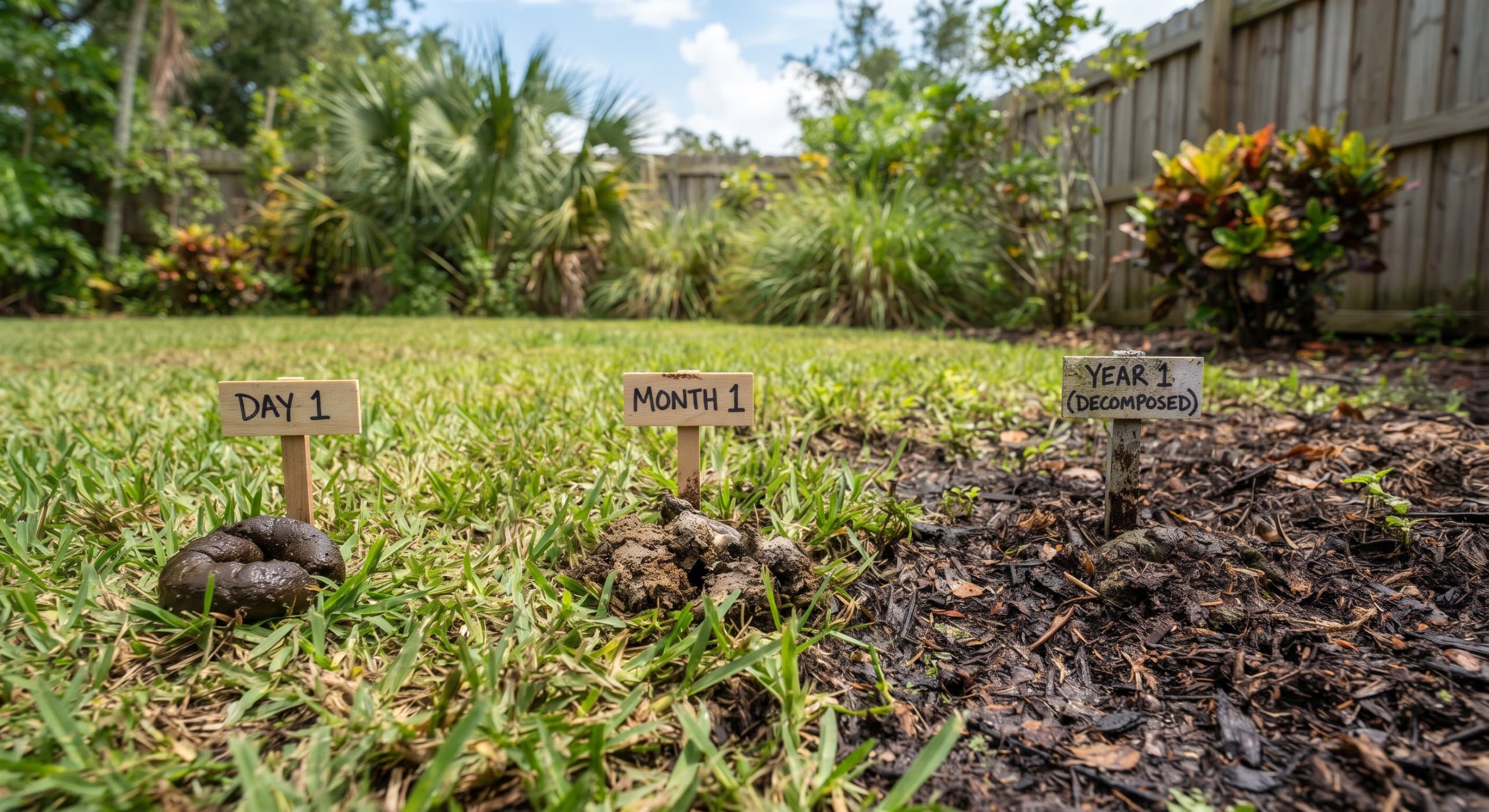
This is also why letting waste sit works against you. Waste is the vehicle, and it can take a year or more to break down on its own, as we cover in how long dog poop takes to decompose.
What Actually Kills Parvo
Not much, which is the frustrating part. Three things to know:
- Accelerated hydrogen peroxide products are the currently recommended choice, and they keep working on porous surfaces like wood and unsealed concrete even when some organic material remains
- Bleach-type products can kill parvo on hard, non-porous surfaces, but they stop working when organic material is present and they're a poor choice for porous surfaces or living grass
- Quaternary ammonium cleaners, common in household disinfectant sprays, are considered less effective against parvovirus despite what some labels claim
Whatever product you use, the surface has to stay wet with it for the full contact time on the label, usually around 10 minutes for parvovirus. A quick spray and wipe does nothing.
The Hard Truth About Grass and Soil
You cannot truly disinfect a lawn. Bleach would kill your grass and still wouldn't reach into the soil, and there's no product that sterilizes an open yard.
What you can do is reduce the viral load and then manage risk:
- Remove every bit of visible waste immediately and bag it, since the waste is where the virus concentrates
- Clean and disinfect the hard surfaces you can reach: patios, sealed concrete, steps, kennel panels, bowls and toys
- Let sunlight and time do what they can on open grass, while understanding that neither is a guarantee
- Keep unvaccinated or partially vaccinated dogs off the affected area entirely
- Talk to your vet about how long to wait before bringing in a puppy, because that depends on the dog's vaccination status, not on a fixed calendar
If Your Dog Has Had Parvo
A recovering dog keeps shedding the virus for at least 14 days after recovery, so the yard keeps getting re-contaminated during that window.
During recovery, pick up waste immediately every single time, bag it separately, keep the dog away from shared spaces and dog parks, and wash your hands and change shoes after being in the yard. Your vet will tell you when your dog is no longer a risk to others.
Prevention Beats Everything Here
Vaccination is the real protection, and it's why your vet is strict about the puppy series schedule and about keeping puppies away from unknown ground until it's complete. No yard cleaning protocol substitutes for that.
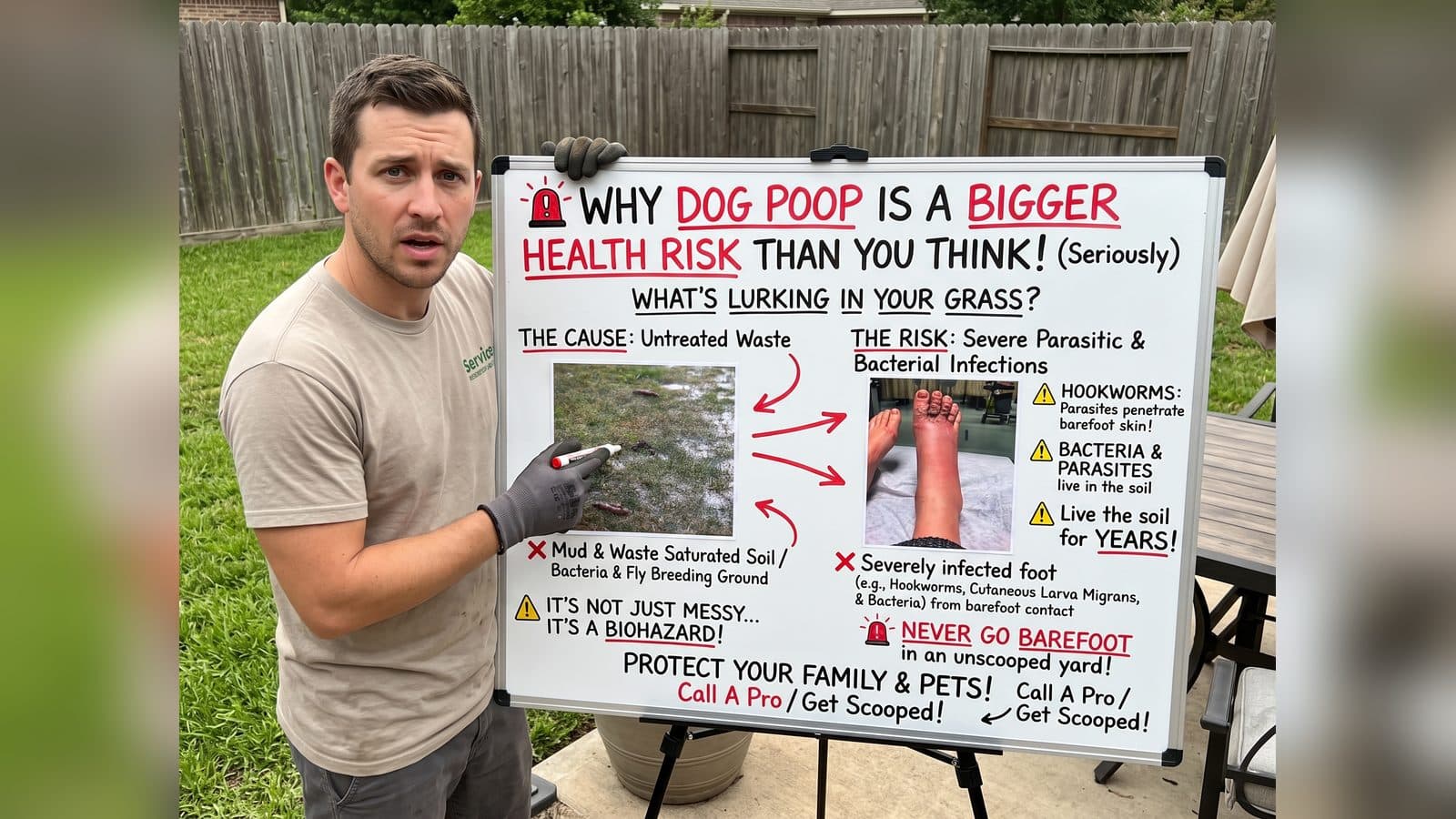
The second lever is simply never letting waste accumulate. Prompt removal is the single most effective daily habit for parvo and for the parasites covered in why dog poop is a bigger health risk than you think. If you're new to this, new puppy yard habits and poop schedules is a good starting point.
Let Us Handle the Waste Part
Consistent, complete waste removal is the piece of this you can actually control, and it's the piece most households let slide. We scoop and haul away every week for dog owners in Wesley Chapel, Zephyrhills, Land O' Lakes, San Antonio, Dade City, Lutz, New Tampa and Plant City.
If a dog in your home is currently sick or recovering, tell us when you book. We'll skip the yard until your vet clears it and start fresh afterward, so we're never moving anything between yards.
Veteran-owned and local. Get your free instant quote in about 60 seconds, with no phone call needed.
Keep reading: Why Dog Poop Is a Bigger Health Risk Than You Think.
Frequently Asked Questions
How long does parvo live in a yard?
Canine parvovirus can survive in the environment for months to years. It resists heat, cold and drying, so time alone is not a reliable way to clear a yard.
What kills parvo in the yard?
No product reliably disinfects open grass and soil. Accelerated hydrogen peroxide products are recommended for surfaces you can clean, and bleach-type products work only on hard, non-porous surfaces with the organic material removed first.
How long should I wait before getting a puppy after parvo?
Ask your veterinarian. The answer depends on the puppy's vaccination status and how thoroughly the area was cleaned, not on a fixed number of months.
How long does a dog shed parvo after recovering?
A recovering dog can shed the virus for at least 14 days after recovery, so waste should be removed immediately during that period and the dog kept away from shared spaces.
Does sunlight or rain get rid of parvo?
Sunlight and weathering reduce the amount of virus over time, but neither reliably eliminates it, and Florida's humidity and shade give the virus better conditions to persist.
About the Author
Tiffani, Owner of Scoop Dog
U.S. Army veteran and Zephyrhills dog mom to Luna and Snickers. Tiffani personally scoops yards and walks dogs across Wesley Chapel, Zephyrhills, Land O' Lakes, San Antonio, Dade City, Lutz, New Tampa and Plant City, and writes every guide from what she sees in local backyards each week. Read her story.
Ready To Hand This Off?
Serving Wesley Chapel, Zephyrhills, Land O' Lakes, San Antonio, Dade City, Lutz, New Tampa & Plant City. Get your instant price in 30 seconds or call (813) 563-2310.
Local service areas
- Pooper scooper in Wesley Chapel
- Pooper scooper in Zephyrhills
- Pooper scooper in Dade City
- Pooper scooper in Lutz
- Pooper scooper in New Tampa
- Pooper scooper in Plant City
- Pooper scooper in Land O' Lakes
- Pooper scooper in San Antonio
- Dog walker in Wesley Chapel
- Dog walker in Zephyrhills
- Dog walker in Dade City
- Dog walker in Lutz
- Dog walker in New Tampa
- Dog walker in Plant City
- Dog walker in Land O' Lakes
- Dog walker in San Antonio